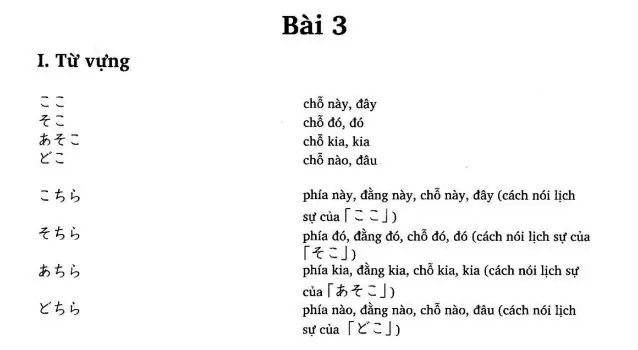
In the journey of learning Japanese, the third lesson often serves as a pivotal checkpoint where learners begin to move beyond basic greetings and start to construct more meaningful sentences. This lesson typically introduces a set of vocabulary items that are both practical and frequently encountered in everyday conversation. By mastering these words, you will find it easier to describe your surroundings, express needs, and even convey emotions. In this comprehensive guide, we will explore a curated selection of essential vocabulary from Lesson 3, providing detailed explanations, example sentences, usage tips, and cultural insights to help you internalize each term effectively.
Introduction: Why Lesson 3 Matters
Before diving into the specific words, it is worth reflecting on why Lesson 3 holds such importance. Early lessons usually focus on hiragana, katakana, and simple phrases like “Konnichiwa” (hello) or “Arigatō” (thank you). Lesson 3 expands this foundation by introducing nouns, verbs, and adjectives that allow you to describe actions, objects, and states of being. The vocabulary presented here is often chosen because it appears frequently in textbooks, media, and real‑life interactions. Consequently, a strong grasp of these terms will accelerate your comprehension and speaking abilities.
Core Vocabulary List
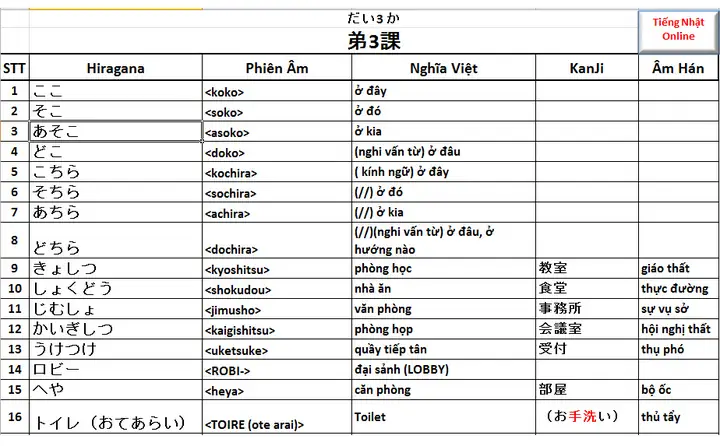
Below is a list of twenty key words and phrases that are commonly featured in Lesson 3 of many Japanese language curricula. Each entry includes the Japanese script, romanization, part of speech, English meaning, and one or more example sentences.
-
本 (ほん, hon) – noun; book
Example: 私の本は机の上にあります。 (Watashi no hon wa tsukue no ue ni arimasu.) – My book is on the desk. -
ノート (nōto) – noun; notebook
Example: ノートに漢字を書きました。 (Nōto ni kanji o kakimashita.) – I wrote kanji in my notebook. -
pens (pen) – noun; pen (borrowed from English)
Example: 青いペンで名前を書きます。 (Aoi pen de namae o kakimasu.) – I will write my name with a blue pen. -
鉛筆 (えんぴつ, enpitsu) – noun; pencil
Example: 鉛筆で絵を描いています。 (Enpitsu de eite oite imasu.) – I am drawing a picture with a pencil. -
消しゴム (けしごム, keshigomu) – noun; eraser
Example: 消しゴムで間違った文字を消しました。 (Keshigomu de machigaita moji o keshimashita.) – I erased the mistaken characters with an eraser. -
机 (つくえ, tsukue) – noun; desk
Example: 机の上にノートとペンがあります。 (Tsukue no ue ni nōto to pen ga arimasu.) – There is a notebook and a pen on the desk. -
椅子 (いす, isu) – noun; chair
Example: 椅子に座って本を読みます。 (Isu ni suette hon o yomimasu.) – I sit on a chair and read a book. -
窓 (まど, mado) – noun; window
Example: 窓を開けて新鮮な空気を入れます。 (Mado o akete shinsen na kūki o iremasu.) – I open the window to let in fresh air. -
ドア (doa) – noun; door (borrowed from English)
Example: ドアを閉めてください。 (Doa o shimete kudasai.) – Please close the door. -
電気 (でんき, denki) – noun; electricity
Example: 電気を消すと暗になります。 (Denki o keshu to yami ni narimasu.) – When I turn off the lights, it becomes dark.
Từ Vựng Bài 3 Tiếng Nhật Có thể bạn quan tâm: Cách Nói “tôi Yêu Bạn” Trong Tiếng Nhật Năm 2026: Cập Nhật Mới Nhất Về Cách Diễn Đạt Tình Cảm
-
照明 (しょうめい, shōmei) – noun; lighting
Example: 照明が明るいので読めます。 (Shōmei ga akarui node yomemasu.) – Because the lighting is bright, I can read. -
カーテン (kāten) – noun; curtain (borrowed from English)
Example: カーテンを閉めると部屋が暗いです。 (Kāten o toimeru to heya ga kurai desu.) – When I close the curtain, the room becomes dark. -
時計 (とけい, tokei) – noun; clock, watch
Example: 時計を見ると、もう夕方です。 (Tokei o miru to, mō yūgata desu.) – Looking at the clock, it is already evening. -
ラジオ (rajio) – noun; radio
Example: ラジオでニュースを聞きます。 (Rajio de nyūsu o kikimasu.) – I listen to the news on the radio. -
テレビ (terebi) – noun; television
Example: テレビでアニメを見ます。 (Terebi de anime o mimasu.) – I watch anime on television. -
冷蔵庫 (れいぞうこ, reizōko) – noun; refrigerator
Example: 冷蔵庫に牛乳を入れました。 (Reizōko ni gyūnyū o iremashita.) – I put milk in the refrigerator. -
電子レンジ (denshi renji) – noun; microwave
Example: 電子レンジで温めます。 (Denshi renji de atamemasu.) – I heat it in the microwave. -
食器棚 (しょくひだな, shokuhidana) – noun; cupboard, dish rack
Example: 食器棚に皿を並べました。 (Shokuhidana ni sara o narabemashita.) – I arranged plates on the dish rack. -
掃除機 (そうじき, sōjiki) – noun; vacuum cleaner
Example: 掃除機で部屋を掃除します。 (Sōjiki de heya o sōji shimasu.) – I clean the room with a vacuum cleaner. -
洗濯機 (sentakuki) – noun; washing machine
Example: 洗濯機で服を洗います。 (Sentakuki de fuku o araimasu.) – I wash clothes in the washing machine.
Detailed Analysis of Each Vocabulary Item
1. 本 (hon) – “book”
The word “hon” is a fundamental noun that appears in countless contexts. It can refer to any type of book, from novels to textbooks. In Japanese, “hon” can also combine with other words to create compound terms, such as “hon’ya” (bookstore) or “bunko” (paperback). When using “hon,” pay attention to the counter word “satsu” (冊) when specifying quantity: “hon o ni-satsu” means “two books.”
2. ノート (nōto) – “notebook”
“Nōto” is a loanword from English and is commonly used to denote a notebook for writing notes. It is often distinguished from “kōtei” (a more formal term for a bound notebook). In school settings, students frequently carry a “nōto” to class.
3. ペン (pen) – “pen”
Another borrowing from English, “pen” is widely recognized. It is important to note that Japanese speakers often use “pen” to refer to any writing instrument that uses ink, as opposed to “pencil,” which uses graphite.
Có thể bạn quan tâm: Tên Tiếng Nhật Cho Con Gái: Lựa Chọn Tuyệt Đẹp Và Ý Nghĩa Ích Lợi
4. 鉛筆 (enpitsu) – “pencil”
The kanji characters 鉛 (lead) and 筆 (brush) together form “enpitsu,” literally “lead brush.” This word is essential for describing drawing or writing tools that can be erased.
5. 消しゴム (keshigomu) – “eraser”
The term combines 消す (to erase) and ゴム (rubber). In everyday conversation, you might hear “keshi‑keshi” as an onomatopoeic expression for erasing.
6. 机 (tsukue) – “desk”
“Tsukue” typically refers to a work surface with drawers, commonly found in offices or study rooms. It is distinct from “table” (桌子, 机) which can be larger and used for dining.
7. 椅子 (isu) – “chair”
A simple noun, “isu” is used for any seat without arms or backrests, though it can also encompass armchairs when context clarifies.
8. 窓 (mado) – “window”
“Mado” can refer to a window in a room or a metaphorical “window” to the outside world. The verb 開ける (akeru) means “to open,” while 閉める (tomeru) means “to close.”
9. ドア (doa) – “door”
Có thể bạn quan tâm: Tuyển Dụng Tiếng Nhật Tại Đà Nẵng: Cơ Hội Việc Làm Hấp Dẫn Cho Người Nói Tiếng Nhật
Another loanword, “doa,” is used for both interior and exterior doors. The phrase “ドアを開ける” (doa o akeru) means “to open the door.”
10. 電気 (denki) – “electricity”
“Denki” can denote electric power in general. Related terms include 電球 (denkyū, light bulb) and 電線 (densen, electric wire). When you say “電気をつける” (denki o tsukeru), you mean “to turn on the electricity” or “to switch on the lights.”
11. 照明 (shōmei) – “lighting”
This noun refers to artificial illumination. It is often used in contexts like “照明が暗い” (shōmei ga kurai) – “the lighting is dim.”
12. カーテン (kāten) – “curtain”
Derived from English, “kāten” is hung over windows for privacy or decoration. The verb 引く (hiku) can be used to describe pulling curtains open or closed.
13. 時計 (tokei) – “clock, watch”
“Tokei” can refer to any time‑telling device. When specifying a wristwatch, you may say “腕時計” (ude‑tokei). The phrase “時計を直す” (tokei naosu) means “to fix the clock.”
14. ラジオ (rajio) – “radio”
Another loanword, “rajio,” is commonly used for both AM/FM radios and internet radio streams.
15. テレビ (terebi) – “television”
Có thể bạn quan tâm: Tên Tiếng Nhật Hay Cho Con Gái
Shortened from “television,” this word appears in many households. The verb “見る” (miru) is used to indicate watching TV.
16. 冷蔵庫 (reizōko) – “refrigerator”
The term combines 冷 (cold) and 蔵 (store). In Japanese kitchens, the refrigerator is often the central appliance for preserving food.
17. 電子レンジ (denshi renji) – “microwave”
Literally “electronic oven,” this appliance has become a staple in modern homes for quick heating.
18. 食器棚 (shokuhidana) – “cupboard, dish rack”
This compound refers to a storage space specifically for dishes and cutlery. It can be either a cabinet or an open shelf.
19. 掃除機 (sōjiki) – “vacuum cleaner”
The word is formed from 掃除 (cleaning) and 機 (machine). Using a vacuum cleaner is often expressed as “掃除機をかける” (sōjiki o kakeru).
20. 洗濯機 (sentakuki) – “washing machine”
Combining 洗濯 (laundry) and 機 (machine), this appliance automates the washing of clothes.
Example Sentences in Context
To illustrate how these words function in real‑life situations, consider the following paragraph:
朝、目が覚めると、窓から光が差し込みます。私は机の上にノートとペンを置き、消しゴムで間違った文字を消します。その後、椅子に座って本を読みます。昼食の後、冷蔵庫からサンドイッチを取り出し、電子レンジで温めます。食器棚に皿を並べ、テレビでニュースを見ます。夜になると、照明を暗くして、ラジオで音楽を聴きます。最後に、掃除機で部屋を掃除し、洗濯機で服を洗います。
Translation:
In the morning, when I wake up, light streams through the window. I place a notebook and a pen on the desk and use an eraser to correct mistakes. Then I sit on a chair and read a book. After lunch, I take a sandwich from the refrigerator and heat it in the microwave. I arrange plates on the dish rack and watch the news on TV. At night, I dim the lighting and listen to music on the radio. Finally, I vacuum the room and wash clothes in the washing machine.
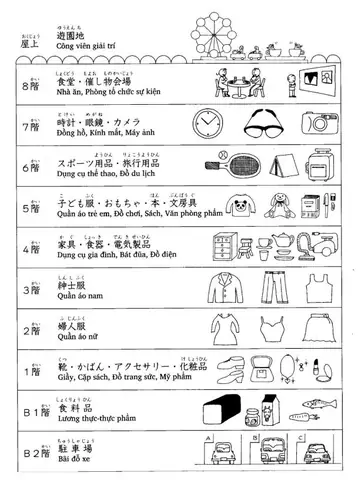
This paragraph demonstrates how the vocabulary items can be woven together to describe a typical daily routine.
Usage Tips and Common Mistakes
-
Counter Words: Remember that many nouns require specific counter words when indicating quantity. For example, “hon” uses “satsu,” while “pen” uses “hon” (borrowed counter). Misusing counters is a common error for beginners.
-
Polite vs. Casual Forms: The example sentences above use the polite form (‑masu, ‑masen). In casual speech, you might drop the “‑masu” ending, e.g., “Hon o yomu” instead of “Hon o yomimasu.”
-
Compound Words: Combining nouns can create new meanings. For instance, “hon’ya” (bookstore) from “hon” + “ya” (shop). Being aware of these compounds expands vocabulary efficiently.
-
Pronunciation of Loanwords: Words like “pen,” “door,” and “curtain” retain their English pronunciation but are adapted to Japanese phonology. Pay attention to the long vowels (e.g., “pēn” vs. “pen”).
-
Contextual Nuance: Some words have multiple meanings depending on context. “Mado” can mean “window” or “opening,” while “tsukue” can refer to any work surface, not just a desk with drawers.
Cultural Insights
Understanding the cultural backdrop of these words can deepen your appreciation. For example:
- Reading Culture: Japanese society places high value on reading and education. The presence of “hon” and “nōto” in everyday life reflects this emphasis.
- Cleanliness and Organization: The frequent mention of “sōjiki” (vacuum) and “sentakuki” (washing machine) highlights the importance of cleanliness and order in Japanese households.
- Technological Integration: The inclusion of “denshi renji” (microwave) and “terebi” (television) illustrates how technology is seamlessly integrated into daily routines.
Practice Exercises
To reinforce your learning, try the following exercises:
- Fill in the Blanks: Choose the appropriate word from the list to complete each sentence.
- 私の___は、机の上にあります。 (My ___ is on the desk.)
- 電気をと、部屋が暗になります。 (When I turn off the , the room becomes dark.)
-
で服を洗います。 (I wash clothes with a .)
-
Translation: Translate the following English sentences into Japanese using the vocabulary learned.
- “I opened the window to let in fresh air.”
- “She put the book on the chair.”
-
“We watched the news on television.”
-
Sentence Creation: Write three original sentences using at least five different vocabulary items from the list.
Additional Resources
For further practice, consider the following resources:
- Mobile Apps: Apps like “Anki” or “Quizlet” allow you to create flashcards with these vocabulary items.
- Online Dictionaries: Websites such as Jisho.org provide definitions, example sentences, and pronunciation guides.
- Language Exchange: Join platforms like HelloTalk or Tandem to practice speaking with native Japanese speakers.
Conclusion
Mastering the vocabulary presented in Lesson 3 is a significant step toward fluency in Japanese. By understanding each word’s meaning, usage, and cultural context, you can construct more complex sentences and engage in richer conversations. Consistent practice, combined with real‑world exposure, will solidify these terms in your memory and enhance your overall language proficiency. Continue to review these words regularly, and soon they will become an effortless part of your Japanese vocabulary repertoire.