
The term sensei (先生) is one of the most widely recognized and frequently used honorifics in the Japanese language. It conveys respect, authority, and a deep sense of gratitude toward someone who has imparted knowledge, skill, or guidance. While the word is often translated simply as “teacher,” its usage extends far beyond the classroom, encompassing doctors, lawyers, artists, martial arts masters, and even experienced professionals in a variety of fields. Understanding the full scope of sensei requires exploring its etymology, grammatical function, cultural nuances, and the ways it is employed in everyday Japanese society.
Etymology and Literal Meaning
The kanji characters that compose sensei are 先 (sen) and 生 (sei). Individually, 先 means “before” or “prior,” while 生 can mean “life,” “birth,” or “student.” When combined, the term literally suggests “one who comes before” or “the one who is ahead in life.” This literal interpretation hints at the core idea behind sensei: a person who has traveled the path earlier and now guides those who follow. The term thus carries an inherent sense of seniority and mentorship.
Grammatical Function
In Japanese, sensei functions as a noun that can be used alone or as a suffix appended to a name or title. It is typically attached after the person’s name, as in Tanaka‑sensei (田中先生), but it can also stand on its own when the context makes it clear whom you are addressing. The word is gender‑neutral and can refer to both men and women. When used in writing, it is often preceded by the honorific ご (go) to add extra politeness, resulting in go‑sensei (ご先生), though this form is less common in spoken language.
Usage in Educational Settings
The most familiar context for sensei is the school system. In elementary, junior high, and high school, students address their teachers as sensei. This practice reinforces the Confucian‑inspired hierarchy that values the teacher’s role in shaping not only academic knowledge but also moral character. Even in universities, graduate students often refer to their professors as sensei, although the term professor (教授, kyōju) is also used interchangeably depending on the institution and the level of formality.
Có thể bạn quan tâm: Người Yêu Trong Tiếng Nhật: Sự Phong Phú Về Cách Gọi Tình Yêu Và Văn Hóa Tình Cảm Nhật Bản
In language schools, especially those teaching Japanese to foreigners, instructors are frequently called sensei by their students. This usage underscores the respect for the teacher’s expertise and the learning environment. The term also appears in after‑school clubs, where a coach or advisor may be addressed as sensei.
Martial Arts and Traditional Arts
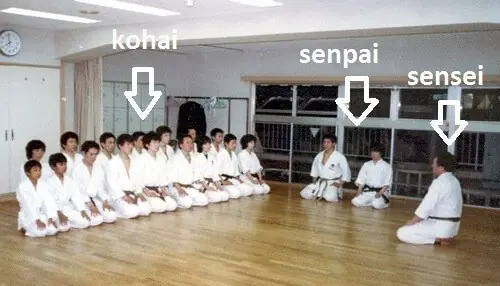
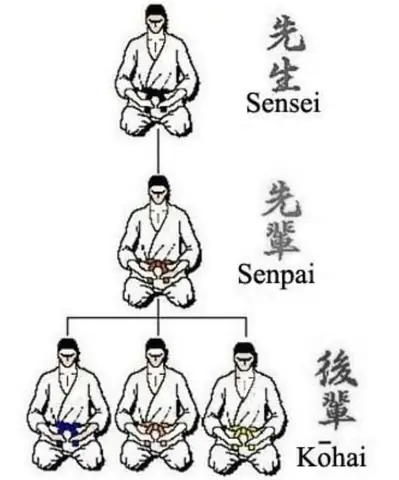
In the realm of martial arts, sensei carries a particularly strong connotation of mastery and lineage. Practitioners of karate, judo, kendo, iaido, and other disciplines often refer to their instructor as sensei. In these contexts, the word implies not only technical proficiency but also the transmission of philosophy, discipline, and ethical values. The relationship between student and sensei in martial arts is often formalized through rituals such as bowing, the presentation of a shogo (certificate of promotion), and the observance of specific etiquette.
Similarly, in traditional arts like tea ceremony, calligraphy, or music, the master teacher is called sensei. For instance, a koto (Japanese harp) teacher might be addressed as sensei by apprentices, emphasizing the apprenticeship model where knowledge is passed down through direct, personal instruction.
Professional and Workplace Contexts
Outside of formal education, sensei is used to show respect to senior professionals. Doctors, for example, are frequently addressed as sensei by their patients and colleagues. The term acknowledges the physician’s extensive training and the trust placed in their expertise. Lawyers, accountants, and engineers may also be called sensei by junior staff or clients, especially when they have achieved a high level of recognition.
Có thể bạn quan tâm: Iku Tiếng Nhật Là Gì?
In corporate environments, the word can be applied to senior managers or mentors who guide younger employees. While the term 部長 (buchō, department head) or 課長 (kachō, section chief) are common job titles, adding sensei adds an extra layer of respect, particularly in more traditional companies. It signals that the person is not only a superior but also a teacher who nurtures professional growth.
Variations and Related Honorifics
Japanese has a rich system of honorifics, and sensei coexists with other terms that convey similar but distinct nuances:
- Senpai (先輩) refers to a senior student or colleague, usually someone who has been at the same institution longer but is not necessarily a teacher. It conveys respect and often implies a mentorship role, though less formal than sensei.
- Sensei vs. Sensei: In some dialects or specific contexts, the word may be pronounced differently, but the standard pronunciation is “see‑n‑say.” The spelling in kanji remains constant.
- Go‑sensei: Adding the honorific prefix ご (go) elevates the politeness level, often used in written correspondence or formal speeches.
- Sensei‑sama: The suffix ‑sama denotes extreme respect, akin to “honorable” in English. This form is rare in everyday speech and appears mainly in ceremonial or religious contexts.
Cultural Significance and Social Hierarchy
The use of sensei reflects broader cultural values rooted in Confucianism, which emphasizes respect for elders, teachers, and authority. In Japanese society, the teacher‑student relationship is sacrosanct; it is believed that by honoring the sensei, one honors the pursuit of knowledge itself. This hierarchy helps maintain order and harmony in both educational and professional settings.
Moreover, the term reinforces the concept of omoiyari (consideration) and enryo (restraint). By calling someone sensei, you acknowledge their superior knowledge and show humility, which is a key component of interpersonal interactions in Japan. The act of using the honorific is itself a demonstration of social awareness.
Historical Evolution
Có thể bạn quan tâm: N5 Tiếng Nhật Là Gì? Tổng Hợp Thông Tin Mới Nhất Năm 2026: Lộ Trình Học Tập, Đăng Kỳ Thi Và Xu Hướng Nâng Cao
The term sensei has its roots in the Edo period (1603–1868) when formal schools, known as terakoya, began to proliferate. Teachers in these institutions were respected community members, and the word sensei was used to denote their role. Over time, as the modern education system was established during the Meiji Restoration, sensei became the standard term for teachers in public schools.
In the post‑World War II era, the word expanded to include a broader range of professions, reflecting the increasing specialization of Japanese society. Today, sensei is ubiquitous, appearing in media, literature, and popular culture.
In Popular Culture and Media
Japanese anime, manga, and television dramas frequently feature characters referred to as sensei. In many series, the sensei is a mentor figure who guides the protagonist, often possessing hidden depths or mysterious pasts. For example, in Naruto, the character Kakashi Hatake is addressed as sensei by his students, embodying both martial prowess and moral instruction. In One Piece, the term is used for various mentors, such as Dr. Vegapunk, though less commonly.
The popularity of these portrayals has helped cement sensei in the global consciousness, often leading to its adoption in English‑speaking fan communities. However, this cross‑cultural borrowing sometimes simplifies the term, omitting its nuanced respect.
International Usage and Misinterpretation

Có thể bạn quan tâm: Hướng Dẫn Chi Tiết Về Kaiwa Tiếng Nhật N5 Năm 2026: Cách Học Hiệu Quả Và Tài Liệu Đề Xuất
When non‑Japanese speakers encounter sensei, they may interpret it literally as “teacher.” While not incorrect, this translation can overlook the term’s broader implications of respect and seniority. In international settings, such as language schools abroad, instructors may be called sensei by students as a sign of reverence, mirroring the Japanese practice.
Conversely, some individuals may overuse sensei in casual conversation, inadvertently diminishing its weight. Understanding when to apply the term—respecting context, relationship, and formality—is crucial for appropriate usage.
Practical Guidelines for Using Sensei
- Identify the Relationship: Use sensei when the person has explicitly taught, mentored, or guided you in a skill or knowledge domain.
- Consider Context: In formal settings, attaching ‑sama or using go‑sensei can increase politeness.
- Avoid Overuse: Refrain from calling acquaintances or peers sensei unless they occupy a clear teaching role.
- Respect Regional Variations: In some regions, alternative terms like 先生 (written identically but pronounced differently) may carry subtle distinctions.
- Combine with Names: Typically, place sensei after the name (e.g., Suzuki‑sensei). Using it alone is acceptable when the interlocutor is clear.
Examples of Phrases
- Sensei, onegaishimasu – “Teacher, please (help me).”
- Sensei no oshiete kudasai – “Please teach me, teacher.”
- Tanaka‑sensei wa ningen desu ka? – “Is Mr. Tanaka a human?” (used humorously)
- Sensei ga sensei – “A teacher is a teacher,” emphasizing the role.
Conclusion
In sum, sensei is far more than a simple translation of “teacher.” It encapsulates a cultural ethos that reveres knowledge, mentorship, and hierarchical respect. Whether in a classroom, dojo, boardroom, or artistic studio, the term signals a deep acknowledgment of the individual’s expertise and the responsibility that comes with it. By understanding and correctly employing sensei, one can navigate Japanese social interactions with greater sensitivity and authenticity, fostering meaningful connections built on mutual respect.